You've built the same tower every night for years.
Three pillows stacked behind you. One under your lower back. Maybe a folded blanket. It holds for 20 minutes — long enough to get comfortable, not long enough to matter.
By the time you're absorbed in your book, the tower has already started shifting. Your neck is tilted to one side. Your back is rounding forward. Two hours pass. You fall asleep like that.
This is why you wake up stiff on weekends. This is why your "neck problem" keeps coming back.
Why pillows don't cut it
Your spine has a natural S-curve. When you sit propped against flat pillows, none of that curve gets supported — your upper back rounds forward and your neck tips down.
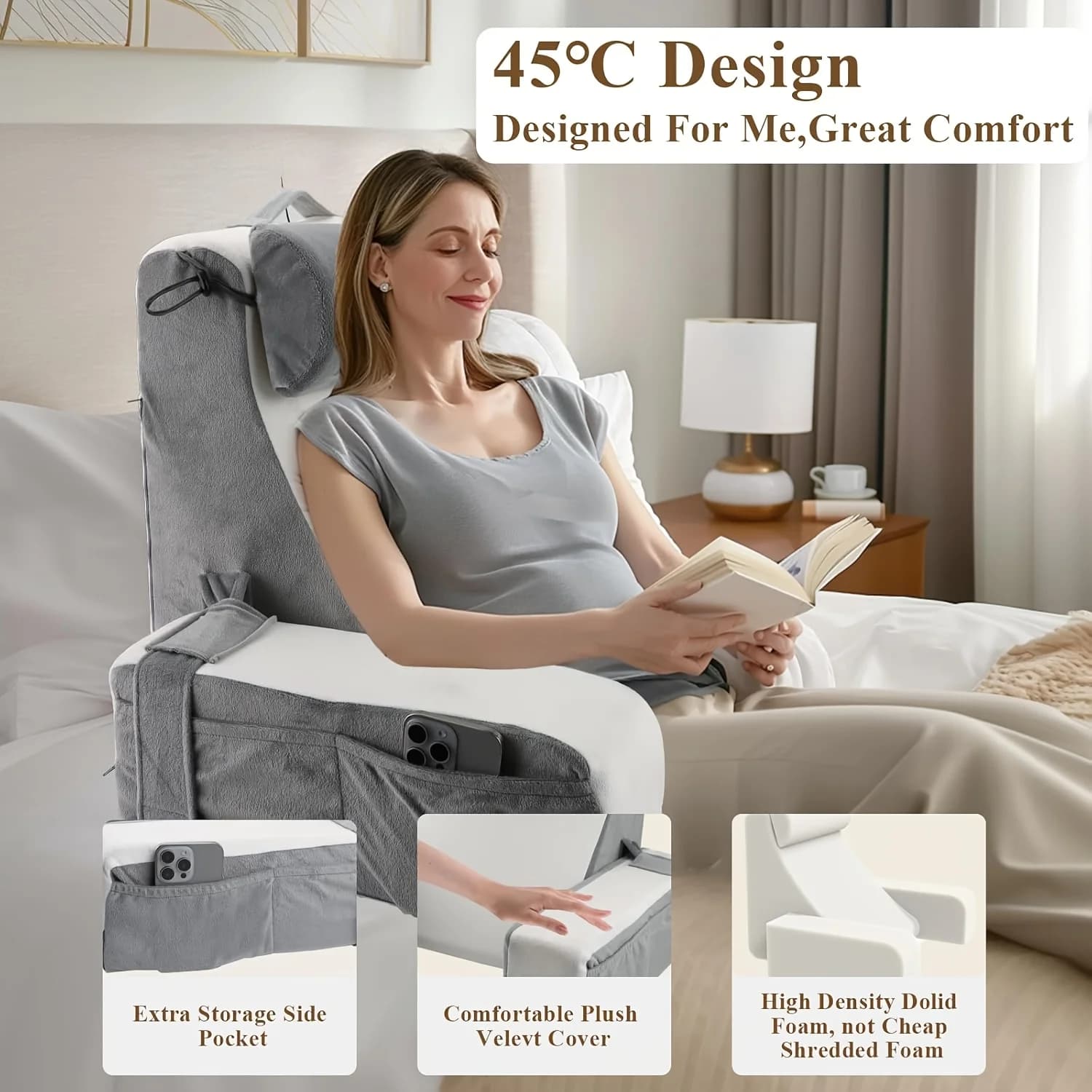
The Reading Pillow is shaped to follow your spine's natural position. High-density memory foam holds your upper and lower back in place. The removable neck roll fills the gap behind your neck. Reinforced armrests keep your shoulders from creeping up.
The result: you can sit in bed for hours and get up without that familiar stiffness.